
Be Way More Average
Why it's high time to love 'Average' Marketing and AI to grow

I. The Era Of The Marketing Snob needs to end.

Most businesses don’t use or need creative excellence to grow. In fact, great businesses I’ve seen grow from being ‘average’, especially in their content.
Why is that?
For years, many in the advertising industry operated under the illusion that creative excellence solely drove business growth.
And clearly, creativity is one of the big factors for growth.
(see no.2 below)
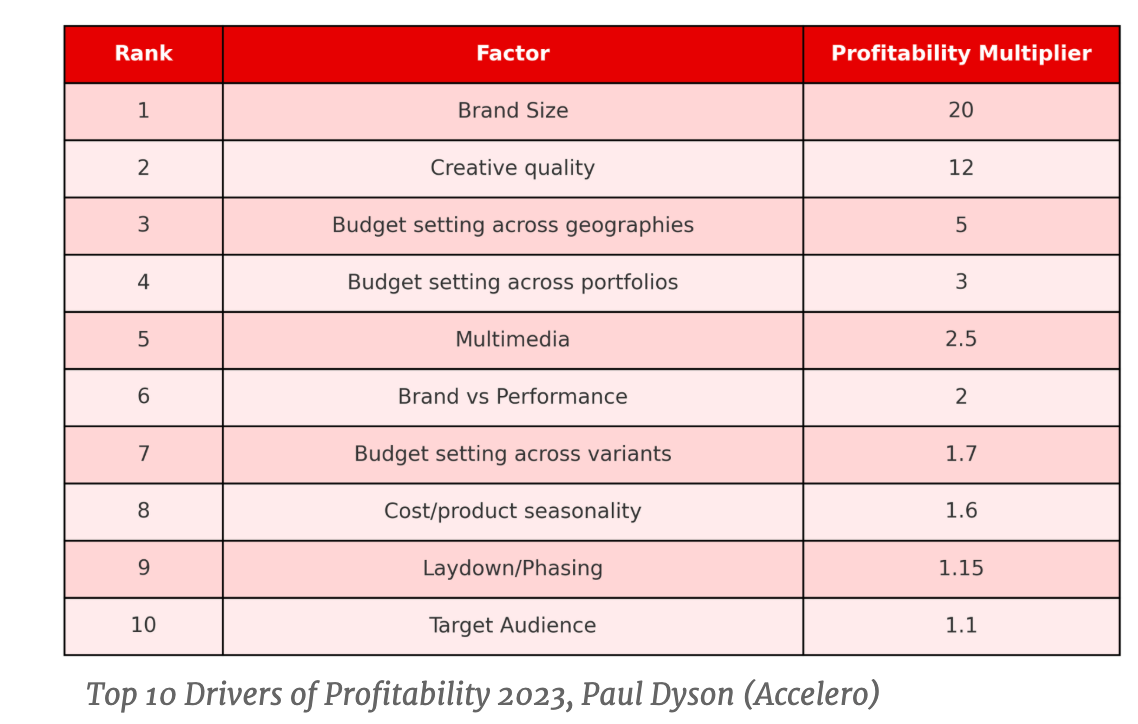
But what if too many vanguards of creativity are just far too snobbish about what other marketing should look like and get stuck in their ivory towers?
What if, for most businesses, growth depends on average content instead? And lots of it.
Sure, ‘average’ isn’t a sexy story.
But I’d argue that - from my experience - ‘average’ content is a bloody good idea and more important for most businesses.
Is this heresy?
I’ve come from 20+ years working amongst creative excellence in London ad agencies and run-of-the-mill content that requires little creativity or big ideas.
And I have worked with many extremely successful businesses that don’t have a creative bone in their bodies.
My lesson is that growth doesn’t need to come from creative excellence, ever. Especially for SMEs.
For most businesses, I’ve been wondering: what if the primary goal is average content rather than excellent content?
Sounds heretical, I know, but I’m going to show you:
Why average marketing content pays (and what ‘average’ means)
How you should split your marketing between average and going wild with creativity
How AI is now critical to any future marketing operation in creating lots more average content
But first, let’s explain why we need to be far less snobbish and see why the concept of ‘average’ is a very good idea.
II. The Exhaustion of Excellence Facing The Modern Marketer
The halo effect of major ad agencies and big TV 30-second spots conditioned businesses to worship the singular masterpiece.
The culturally impactful campaigns, the ones that go viral for more than a week, and the award-winning TV ads at Cannes festivals.
Tick vs tock. You’re not you when you’re hungry. Once you pop...
But of the 450+ million companies worldwide (of which about 9/10 are SMEs), the businesses with the budget and scale to create marketing communications that radically change culture and business in one 1-3 year campaign are a mere handful.
And of the 10s of thousands that enter awards for their marketing success (I’d estimate 100,000 from a Google Search of entrants to the Effies and Cannes), we’re looking at 0.022% who think they’ve done a good creative job.
But so many businesses still grow without ever thinking about a creative excellence award.
Why creative excellence is exhausting for businesses.
Firstly, it creates crushing pressure if you pay attention to the narrative. The mindset becomes: “If every piece of marketing content fails to be excellent, it is a complete failure”
This creates shame for businesses about how they talk about their marketing. No pride. They say things like “I’m not creative".
They might have a tiny marketing team or none at all.
But because of this obsession with excellence at all costs narrative, there’s an intangible shame when you produce something that feels a tad dull and or, dare I say, ‘average’.
But you know this stuff works and you see it working because you’re in your business and you get it better than a marketing agency would.
But if you celebrate your high-performing whitepaper or infographic in public, you worry about coming across as dull.
This can create paralysis, leading you to think you need to wait for a massive, award-winning marketing idea before publishing anything.
If you have the time and budget, getting this right takes months to figure out and carries significant risk. You need the right talent on your team, you probably need an agency, and whilst you get your ducks in a row, you can end up leaving your audience in radio silence.
The Binary Trap: The Creativity vs Average Argument
We falsely believe we have only two choices. We think we have to either be a spammy content factory or an artisanal creator who only speaks when they have absolute genius to share.
This polar thinking is dangerous.
Successful modern brands are actually built on a dance between the two. You need an unapologetically average and highly functional 80% foundation to keep the lights on and leads coming in. That foundation feels average, but it performs in reality. It can feed and fuel the wildly creative 20%. Average is not a dirty word. It is the engine of survival.
III. Why Being Average Pays: Some Mathematical Proof
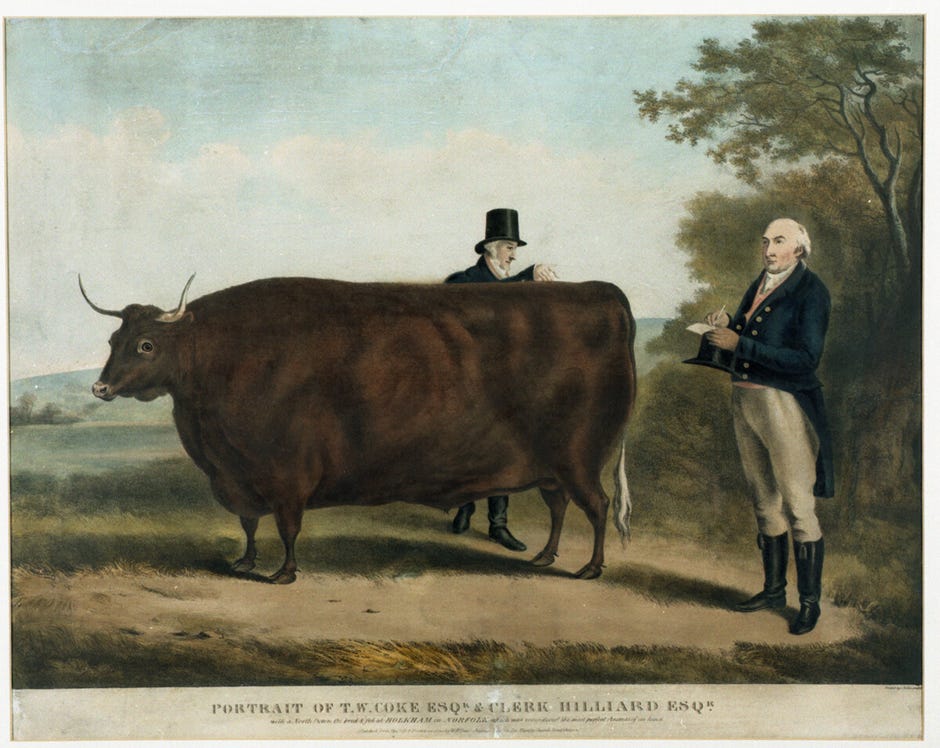
→Proof: Guessing the weight of an ox
To understand this, we need to look outside of marketing for a minute to see how the concept of‘average’ in the real world can be a good thing.
Nature and finance do not reward singular excellence. They reward the combined average. Singular excellence relies on absolute perfection. That makes it incredibly fragile. The average assumes things will go wrong, which makes it highly resilient.
Think about statistics. Back in 1906, a statistician named Francis Galton watched hundreds of villagers guess the weight of an ox.
The singular experts got it totally wrong. But the average of all 787 uneducated guesses was incredibly close to the actual weight. They guessed 1,197 pounds, and the real weight was 1,207 pounds. They were off by just 1%.
In a massive aggregate average, individual biases and errors just cancel each other out.
It’s what’s known as the ‘Wisdom Of The Crowd’.
→ Proof: Wisdom Of The Crowd and Random Forests
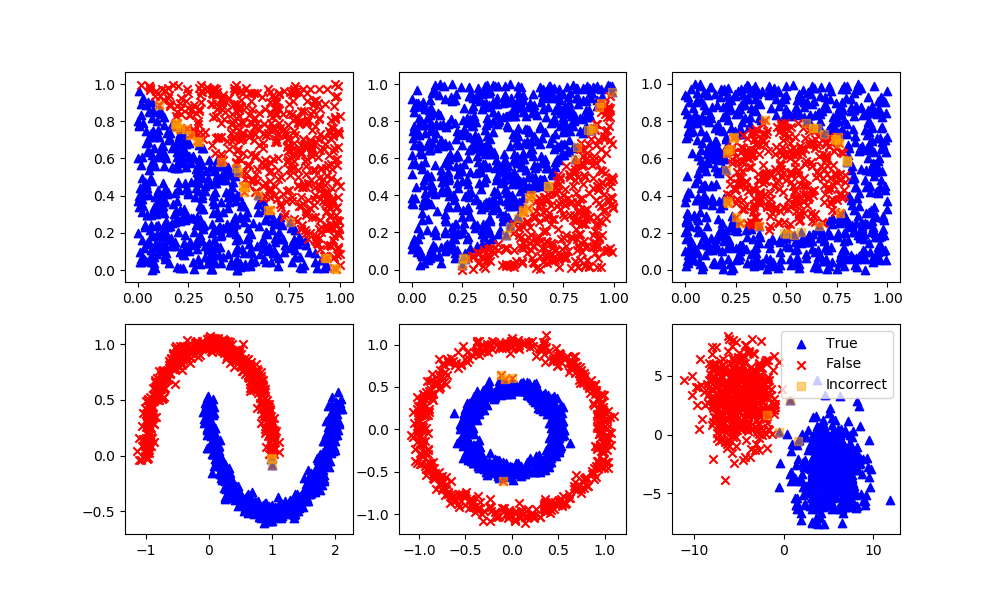
You see the exact same thing in tech. When data scientists build AI, they do not rely on a single highly complex, genius algorithm. That becomes too rigid and fails in the real world.
They group hundreds of slightly better-than-average models together. It is a process called ‘Random Forests’. The combined average of those weaker models mathematically outperforms the single genius model every time.
Biology and Finance
Biology shows us the exact same pattern. A farmer planting a genetically identical monoculture theoretically achieves a peak harvest. But a single disease will wipe it out within days or weeks, causing famine. A diverse polyculture with average yields survives simply because of its variance.
Take investing too. Active stock pickers hunting for the next big win almost always underperform passive index funds over the long term. Most active large-cap funds underperform the S&P 500 in the long run. The index fund guarantees you will never beat the market average. But its aggregate nature guarantees you will never go bankrupt ON a bad bet either.
In other words, ‘average’ is foundational.
II. Why ‘Average’ Content Builds Businesses
Let’s redefine ‘Average’ Content
Firstly, average does not mean AI slop. Slop is harmful, factually incorrect, and ignores what the customer actually wants.
Average = ‘functional utility’
This is what I mean by average. Content that is accurate and formatted beautifully and directly answers a user’s query or pain point without needing a deep philosophical point of view and without needing to be highly differentiated.
Think about industry reports, blog posts, FAQs, trends reports, company updates, and webinars.
High volume repeatable content.
This is the 80%. This is where businesses grow too.
It’s about actively avoiding a masterpiece and thinking of the customer’s functional needs. If the customer is up at midnight trying to reset a password, they just want a bulleted list FAQ.
AI is the ultimate engine for this utility.
Average content & the Long Tail of SEO matters
Spending a month on a single excellent industry article results in a brief spike in vanity traffic. Wahoo.
Using AI to build a system of hundreds of average utility pages captures the massive long tail of search intent. Wahoo too.
Most unique search phrases are long-tail keywords. These fragmented queries individually represent a tiny fraction of the total search volume.
Their sheer number creates an enormous compounding opportunity for predictable traffic if you answer them.
Sure, this arena is adapting as GEO enters the scene and is highly nuanced, but it paints a picture of the power of thinking from the customer's perspective from a functional point of view.
Average = Content Consistency, Mental Availability and Brand Science
Marketing Professor Byron Sharp talks about how brands grow by reaching light buyers through physical and mental availability. It takes constant touchpoints to convert a buyer. And high-average content volume triggers the mere exposure effect because it reminds people that you are there. You become the safe and familiar choice.
And that’s what average content does beautifully.
Social algorithms on platforms like LinkedIn punish erratic posting by shy social media posters and companies that chase one-off virality.
Instead, they reward topic reliability. Posting functional content daily trains the algorithm to recognise you as a reliable data source. It raises your baseline reach.
Why AI is ideal for Average: it frees up ‘Wild Creativity’
Because AI handles volume and much of the functional utility content, this frees human teams to channel creative energy into creating rarer, emotionally hard-hitting marketing.
The big idea. The sexy stuff. The shift the needle big time in a big hit stuff.
All are sitting on a foundation of average.
Both matter.
Average ≠ Slop Factory.
Generating one AI article is easy enough. Generating thousands without triggering spam filters requires a rigorous strategy.
Avoiding producing AI slop, all depends on AI being set up right, of course. You need to know what you’re going to get the content you want with every output from AI.
You need to map out your AI processes first and build out the content research, strategy, and content production workflows that matter. It doesn’t take long, but it’s critical.
If busy founders or marketers try to build custom-content engines themselves without the time and talent, it’s very easy to end up with a Slop Factory.
Get faith in those systems first, and then compound them over time by running and tweaking.
Example of a social media content engine I make for businesses
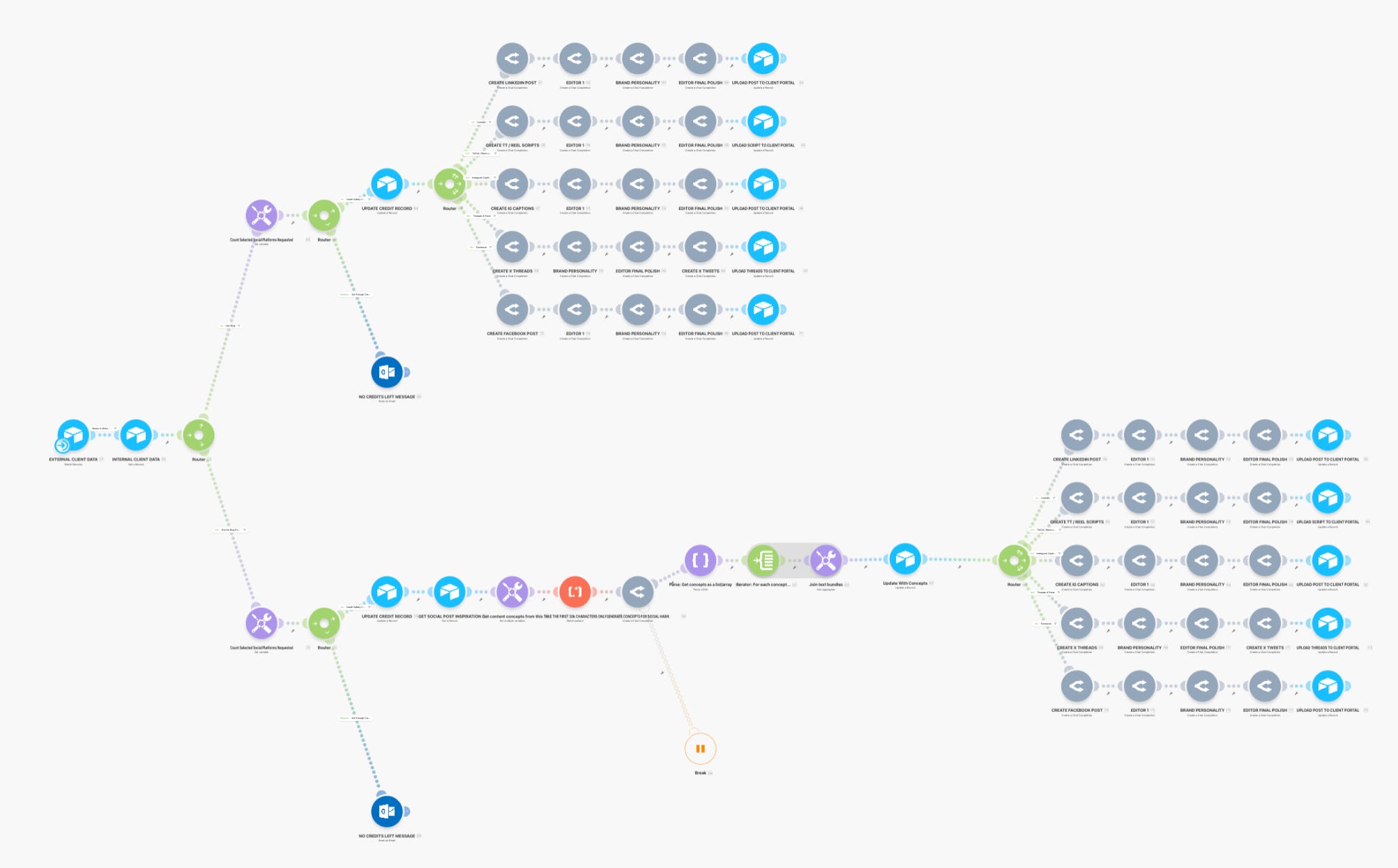
Defend AI and Average against Creativity Purists
Critics will say that using AI to churn out average content makes you a commodity.
But they confuse the purpose and place of high-volume content with its critical relevance to business growth. No one chooses a bank because its ATM interface is a unique masterpiece. They choose it because it works. The ‘average’ content is like your ATM.
III. Action: Step Off the Treadmill
The business that relies solely on excellence is fragile.
It starves between moments of wild creative inspiration.
The business that embraces the dance between content volume, investing in AI, and wild creativity becomes highly resilient.
You need that unapologetic, AI-assisted, average-utility content to fund your wildly human creativity.
We need to let the functional average do the heavy lifting for you.
To invest in AI content systems to produce amazingly average content that does the functional work and gets over our snobbery.
Sure, I’ve spent 20 years doing both types of marketing, and today 80% of my time goes to ‘average’ content that is built to perform. Building prompts, workflows and ‘engines’ that create robust functional utility.
Purists may say this isn’t sexy or beautiful. But I think it can be, and I love it and find the tech as inspiring as a big-budget Super Bowl ad.
Let me know your thoughts.
Tactical ways on how to implement this in my next newsletters.
Have a good week, and maybe realise that average is a force for good. About 80% of the time.
Simon